
5 Signs a Fence Post Is Rotting at the Base
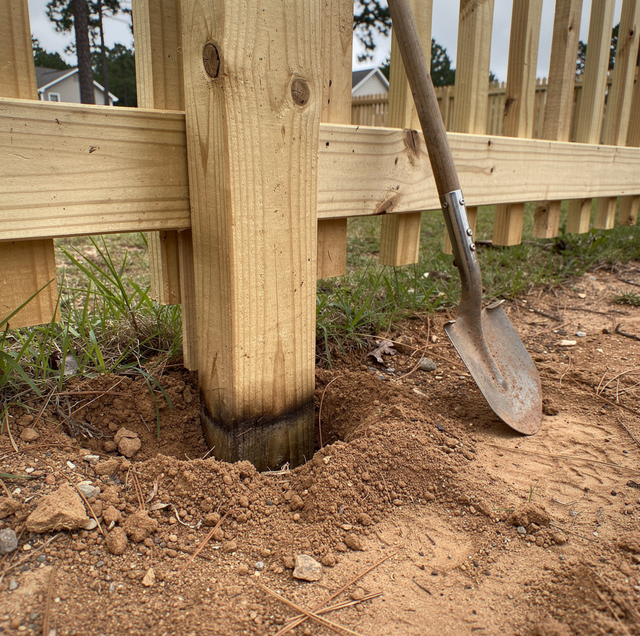
You push on a post, and it gives more than it should, or the top rail sways more than you remember from last year. Something below the soil line has changed. Wood does not rot all at once, and by the time a problem shows above ground, the part you cannot see is usually further along than the part you can.
Catching a rotting post early keeps a small repair small. Wait long enough, and the same post that could have been swapped out in an afternoon takes the panels on either side of it down with it, or forces a decision about the whole line rather than just one section.
Why the Base Fails Before Anywhere Else
Every wood post rots from the ground up, and it is not random. The bottom few inches, right where the post crosses from air into soil, sit in the one spot that has everything wood-decaying fungi need at once: steady moisture and enough oxygen to keep feeding on it.
Above ground, rain runs off, and wind dries the wood back out between storms. Below ground, in a footing, the wood is often packed in soil or concrete with limited airflow, which actually slows decay in a stable, buried section. Right at the surface is the exception. That narrow band holds water against the wood through capillary action, gets rewet with every rain, and still gets enough air exposure for fungal growth to continue. It is the one zone that combines wet and breathable, and that combination is what wood rot needs.
Grade level is also where soil movement, mower nicks, and piled mulch all concentrate, so it takes more abuse than any other few inches on the post. A post can look sound at eye level and still be failing right where it matters most.
Signs Worth Checking For
A few signs show up before a post fails outright, and most take less than a minute to check.
Wobble at the base: Push the post side to side, low to the ground, rather than at the top rail. A healthy post barely moves. One that rocks, even slightly, has likely lost its grip in the soil, and rot at grade is the most common reason a well-set post starts to move.
Discoloration at the soil line: Look for wood that has turned gray, black, or unusually dark right where it meets the ground, compared to the wood a foot higher. Weathering grays wood evenly across the whole exposed surface; a band of dark, wet-looking discoloration concentrated at grade points points to decay instead.
A lean the neighboring posts don't share: One post tilting while the rest of the run stands straight is a strong clue the problem is local to that post rather than general settling.
Fungal growth or a musty smell near the base: Small mushrooms, fuzzy white or dark growth, or a damp, earthy smell at ground level show that fungal decay is active, not just weathering.
Insect activity at grade. Termites and carpenter ants are drawn to already softened, moisture-holding wood, so finding them clustered at a post's base is often a sign that rot got there first.
The Screwdriver Test for Soft Wood
Sight and touch tell you a lot, but a simple probe confirms it. Press a screwdriver or awl into the wood a couple of inches above and below the soil line, then compare the resistance to that of a spot higher up the post you know is sound.
Healthy wood resists the point and only dents slightly. Rotted wood lets the tip sink in with almost no resistance, sometimes an inch or more into wood that looks solid from the outside. That gap between how the wood looks and what it actually is underneath is why the probe matters more than a visual check alone. A firm-looking painted or stained surface can sit over wood that has turned to punk just below it.
If the screwdriver goes in easily, all the way around the post at grade, the wood has lost enough structural integrity to no longer do its job, regardless of how it looks a few inches higher.
Cracking and Splitting Near Grade
Cracks are trickier to read than soft wood because wood splits for more than one reason, and not every crack means rot.
Vertical checking, thin cracks running with the grain along most of the post, is normal seasonal shrinkage and not by itself a warning. What changes the read is a crack concentrated right at or just above the ground line, especially one running horizontally or opening wider than checking cracks elsewhere on the same post. That kind of split usually means the fibers underneath have weakened enough that the post's own weight, plus wind load on the panel, is pulling it apart at its thinnest, wettest point.
A crack paired with any nearby softness is a combination to take seriously. A crack alone, on wood that still resists a screwdriver, is more likely ordinary weathering.
How One Bad Post Threatens the Whole Line
A fence does not fail post by post in isolation, because the posts are not independent. Rails and panels tie each post to its neighbors, so every post carries some of the load for the sections next to it, not just its own span.
When one post rots at the base, it stops carrying its share of the load. Wind pressure on the panel, once spread across several sound posts, concentrates on the posts still standing on either side of the failed one. Those neighbors start carrying more than they were set to handle, which is why a rotted post often shows up first as a slight lean or a widening gap two or three sections away rather than right at the failing post itself.
Gate posts feel an outsized version of this problem, since a gate adds swinging weight and latching pressure to whatever load the post already carries. A gate post rotting at the base tends to show up faster than a mid-run post, because the gate becomes the pry bar that finishes the job.
Left alone, one failed post can turn into a section of leaning, gapping panels, and eventually a run that needs more work than the single post that started it.
Repair Options: Replacing a Post vs Sistering or Bracing
Once you have confirmed rot at the base, the repair choice comes down to how much sound wood is left and how the post sits relative to the rest of the line.
Full post replacement removes the compromised post entirely, digs a new footing, and sets a new post at the original depth, ideally protected against the same moisture exposure that took out the last one. This is the real fix once rot has eaten through a meaningful cross-section of wood at grade, because bracing cannot restore strength to wood that has already turned to punk.
Sistering attaches a new length of treated lumber alongside the existing post, bolted through sound wood above the rot, to carry load past the weak section. It can extend a post's working life when it is starting to soften but still has structural wood above and below the affected zone, and it is less disruptive than pulling the post and its footing. The tradeoff: sistering bridges around the rot rather than removing it, so it works best as a stopgap on a post that is not yet failing badly.
Bracing, angled supports tied from a sound point on the post to a new ground anchor, can steady a leaning post temporarily, but it addresses the lean rather than the decay causing it. Bracing without treating the rot underneath buys time, not a lasting fix.
A post that still resists a screwdriver near the base, with only minor softening, is a reasonable candidate for sistering or bracing. A post where the tool sinks in freely around most of its base circumference has lost too much wood to save, and replacement is the only option that actually holds.
When It Points to Replacing the Whole Fence
One rotted post rarely means the entire line needs to come out. Posts fail at different rates depending on which one sat in wetter soil, caught runoff from a downspout, or simply had a knot or weak spot in the original wood. Replacing the one or two posts actually showing decay, while the rest of the line still tests sound, is usually the more practical path.
The calculation changes when the rot is not isolated. If several posts across the run show the same softness at grade, if the fence is old enough that the untouched posts are close behind the failed ones in age and exposure, or if repeated post swaps start adding up across a season, that pattern says the wood itself, not just a few unlucky posts, is reaching the end of its service life. At that point, replacing posts one at a time can become a slow project that never quite gets ahead of the next failure, and a full fence replacement, done once with new materials and better moisture protection at the base, ends up being the more sensible route.
There is no fixed number of rotted posts that decides this for you. It comes down to whether the rest of the line is a few years behind the failed posts or riding right alongside them.
Frequently Asked Questions
There is no fixed timeline, since it depends on wood type, soil drainage, and how the post was set, but untreated pine posts can show real softness in as little as five to seven years, while properly treated posts set with good drainage often go past fifteen. A post in a low spot that collects runoff decays faster than an identical post a few feet away on higher ground.
The screwdriver probe works without excavation, since you only need to press the tool in at and just above the soil line. Digging is useful when you want to see how far the rot extends below grade or to check the footing's condition, which a surface probe cannot tell you.
Yes. Naturally rot-resistant species like redwood contain oils that slow fungal growth, so decay starts later and progresses more slowly at the base compared to untreated pine or fir. Pressure-treated lumber resists rot chemically throughout, but the treatment can wear thin at cut ends or where the post was drilled after treatment, which is often where decay gets its first foothold even in treated wood.
Not necessarily. A rotted post is a chance to upgrade base protection, whether that means a post with a factory-applied ground-contact rating for direct burial, a composite or vinyl sleeve around the buried section, or setting the new post on a raised bracket or gravel base that keeps wood off standing water. Matching the old post's species without addressing what caused it to rot usually just resets the clock on the same failure.
No. A post can lean because its footing cracked, because soil around it settled or washed out, or because a storm loosened its grip in wet ground, all without the wood itself being rotten. That is why the probe test matters before choosing a repair; a lean from a shifted footing gets fixed differently than a lean from decayed wood.
Adding concrete around an already-rotted section does not restore the wood's strength and can trap moisture against it, sometimes making the decay worse. New concrete only helps when it is poured around sound wood to improve the footing itself; once a post's base has turned soft, the fix has to address the wood, not just the concrete holding it.
Rot at the base is where a fence post's real story gets written, since that narrow band where wood meets soil decides how long everything above it stays standing. A wobble, a dark band at grade, a screwdriver that sinks in too easily: each is worth a five-minute check the first time you notice it, because catching it early keeps one soft post from becoming a whole section's problem.
Have a post checked at the first sign of softness or lean — a quick inspection now can save the rest of the line. The Fayetteville Fence Company LLC serves Fayetteville, Hope Mills, and Raeford. Call (910) 994-3634.
