
Why Wood Fences Rot 5 Years Faster in NC Than the Manufacturer Says
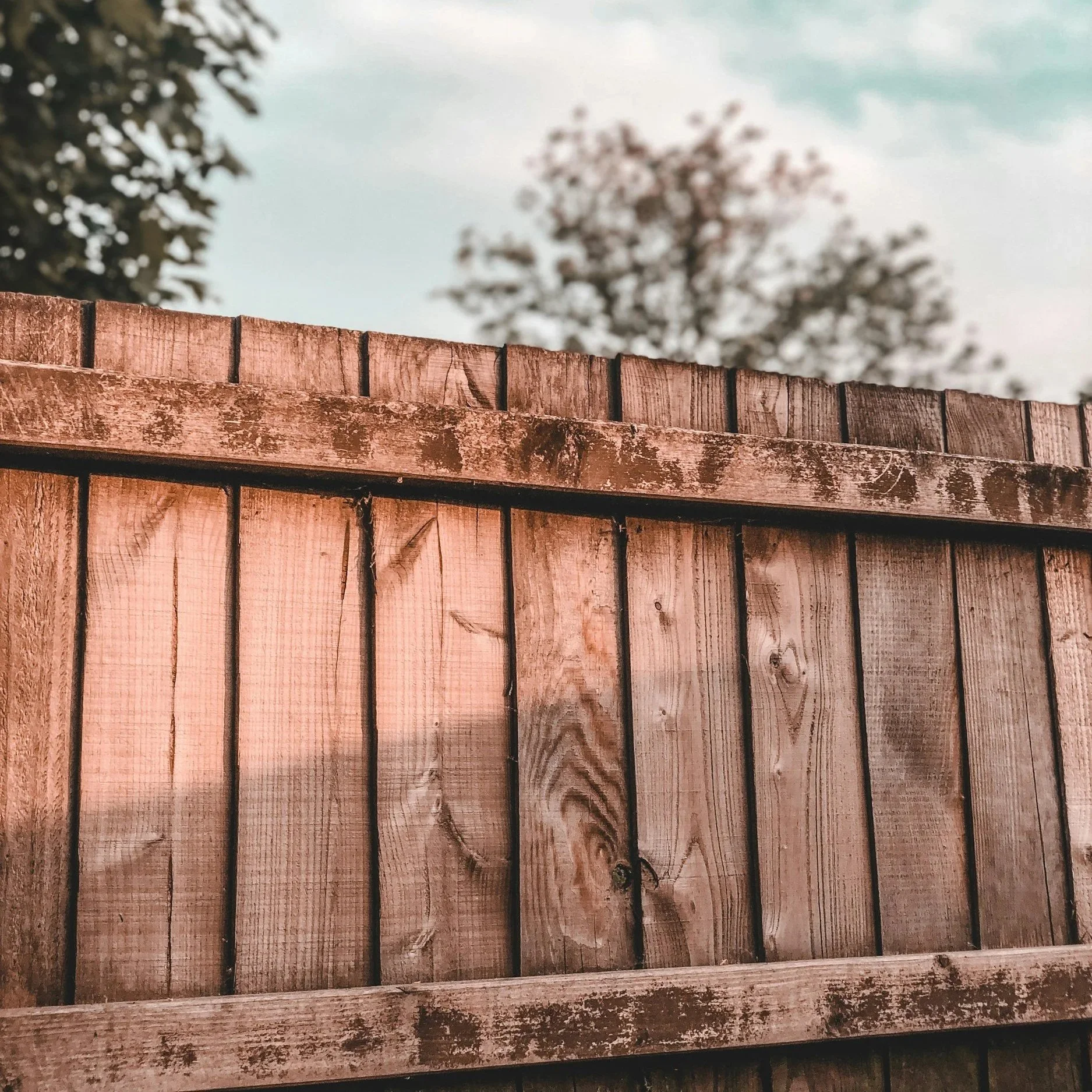
Weathered wooden privacy fence showing moisture damage caused by North Carolina humidity, accelerated wood rot, and long-term outdoor exposure.
If your wood fence is starting to rot at the post bases at year 8 instead of year 20, the manufacturer is not lying about the lifespan rating. The rating is real for average US conditions. North Carolina is not average. Cape Fear humidity, Sandhills coastal influence, and 40 to 50 inches of annual rainfall accelerate wood fence aging by 5 to 10 years beyond what the warranty implies. The math is what it is. Knowing why the gap exists, where to look for early failure, and what to do about it before replacement becomes the only option is the difference between a fence that lasts 8 more years and one that fails this winter.
The Manufacturer Number vs the Cape Fear Number
Pressure-treated pine fences are commonly rated for 20 to 25 years. Cedar fences are rated for 25 to 30 years. In Fayetteville and the surrounding Cape Fear region, the actual lived numbers are closer to 10 to 15 years for pressure-treated pine and 15 to 20 years for cedar. The gap is not a manufacturing defect. It is humidity.
The southeastern US humidity belt (North Carolina, South Carolina, Georgia, Florida, eastern parts of Tennessee and Alabama) runs 5 to 10 years shorter on wood fence lifespans than the manufacturer’s published estimate. The Sandhills sit inside that belt. Your fence ages faster than the rating because your climate is more aggressive than the rating’s reference climate.
This article explains why the gap exists, what it costs you in terms of early failures, and how to plan the next fence so the gap is smaller.
How NC Humidity Accelerates Wood Rot
Wood rot is a fungal process. Fungi need three things to thrive: moisture, oxygen, and a temperature range. Most of the year in eastern NC supplies all three. The wetter the wood and the longer it stays wet, the faster the fungi work.
The Cape Fear and Sandhills regions have year-round humidity averaging 70 to 80 percent, with summer afternoons commonly above 90 percent. Rainfall averages 40 to 50 inches per year, which is above the US average. Wood fences in this climate cycle through wet-dry cycles continuously, and the wet half of each cycle is what fungi exploit.
The manufacturer’s lifespan figures are based on average US conditions. NC is not average. Your fence reaches the manufacturer’s “year 25” appearance and structural state somewhere around year 18 if you are lucky, year 15 if your fence sits in a damp spot, and year 12 if you have done no maintenance.
This is not a defect in the wood or the treatment. It is the cost of living in a humid climate that supports more fungal activity than the wood was rated for.
Where Rot Starts First
Knowing where to look extends the time between damage and fence replacement. The inspection focus matters more than how often you inspect.
Three primary rot zones show up first in NC humidity.
The post base, especially the 6 inches just above and below ground level. Soil moisture wicks up the post; rain runs down the post and pools at the base. Both effects converge at ground level. Most fence failures in NC start here.
The bottom rail, especially where it meets the post. Bottom rails sit close to the ground and catch splashback from rain. Untreated cuts at the post intersection are vulnerable because pressure-treatment chemicals do not penetrate to the cut depth.
The pickets at the bottom 6 inches, especially if mulch or planter beds are pushed against the fence. Mulch holds moisture against the wood and accelerates rot at the bottom of pickets. The same fence with a 6-inch gravel border instead of mulch lasts noticeably longer.
Knowing these three zones means the inspection can be quick and targeted. Soft wood, dark stains, fungal growth, or gentle pressure that crushes the fiber are all signs of active rot. The screwdriver test (press a screwdriver tip into the wood; healthy wood resists, rotted wood gives) confirms whether the eyes are seeing real damage.
What Homeowners Can Do to Slow the Rot
Specific maintenance moves matter more in high-humidity climates than in drier ones. The same effort returns more fence-life-extension here than it would in Phoenix.
Stain or seal every 2 to 3 years for pressure-treated pine, every 3 to 4 years for cedar. The sealer slows water absorption and gives fungi less wet wood to feed on. Use oil-based stains; they penetrate deeper than water-based and hold up longer in humid climates.
Keep mulch and planter beds 6 inches away from the fence base. Your aesthetic preference may be mulch right against the fence; the engineering preference is a small gap. The gap matters more in NC than in dry regions.
Trim grass and weeds away from your fence weekly during the growing season. Vegetation traps humidity against the wood. The minute you let kudzu or English ivy work into the picket gaps, you have accelerated rot in the section it touches.
Fix drainage problems near posts. Standing water at the post base after rain accelerates rot sharply. If a post sits in a low spot, regrade or add drainage. The cost of a small drainage fix is far less than replacing a rotted post and the panels it pulled down.
Use stainless steel or hot-dipped galvanized hardware. Standard galvanized hinges and brackets corrode faster in NC humidity, and rust from hardware accelerates wood rot at the contact point. Spending an extra $20 on stainless hinges per gate is one of the least expensive ways to extend the lifespan.
These steps will not get a pine fence to last 25 years in NC. They might get it to 18 to 20 years instead of 12 to 15. The math still favors switching materials at replacement time, but in the meantime, you are extending what you have.
Why the Sandhills Region Has Its Own Wood Rot Pattern
Two factors differentiate the Sandhills from coastal NC and the Piedmont.
Sandy soil drains fast. Posts in your sandy soil typically do not sit in standing water for long, which slows base rot compared to the clay soils farther west that hold water for days after rain. This works in your favor.
Coastal-influenced humidity. Fayetteville sits about 100 miles inland from the Atlantic coast, but the humidity belt extends well into the Sandhills. Summer dew points above 70 degrees are normal. Wood stays wet from morning dew alone for several hours each day during summer, even on otherwise sunny days.
Net effect: Sandhills region wood fences last slightly longer than coastal NC wood fences (drainage helps), but still fall short of the manufacturer’s published lifespan (humidity dominates). Your fence outlasts a Wilmington fence by maybe 2 to 3 years on average. It still falls short of the warranty’s implied lifespan by 5 to 10 years.
When Replacement Makes More Sense Than Repair
Three scenarios where the wood fence is past saving.
Multiple posts (more than 25 percent) with rot at the ground line. Post replacement requires digging out concrete and resetting; doing it across multiple posts approaches the cost of full replacement. At that point, the math favors starting fresh.
Bottom rails sagging or crumbling on multiple sections. Rail replacement is doable on individual sections, but at scale, the labor and material costs approach replacement. If you are looking at fixing 4 or more sections, get a replacement quote first.
Pickets cracking, splitting, or showing fungal growth on more than 30 to 40 percent of the fence. The cosmetic and structural damage is broad enough that replacement gets a fresh start at a comparable cost.
For homeowners considering material switches at replacement, vinyl, composite, and aluminum all outperform wood in NC humidity. The lifespan-to-cost math favors making the switch at replacement rather than installing another wood fence that will rot in 12 years. Your replacement decision is the right time to revisit whether wood is the right material for your situation, or whether the humidity penalty has tipped the scale.
When Wood Is Still the Right Choice
Wood is not always the wrong answer in NC, even with the humidity penalty.
Wood is the right answer when you specifically want the natural look that no plastic or metal can fully replicate. The grain, the warmth, the way real wood ages: none of those translate to vinyl. If you want the look, you accept the lifespan penalty.
Wood is the right answer when your budget makes wood the only feasible option. The upfront cost of wood is real, and for many homeowners, the math works only if a 12-year fence is acceptable.
Wood is the right answer when the property is in an HOA that requires wood fences. Some Cumberland County HOAs specify wood by style; vinyl and composite are not approved options. In that case, your choice is which wood, not whether wood.
Wood is the right answer when the fence will be replaced again within 10 to 15 years anyway: rental properties with high turnover, short-term ownership plans, properties being prepped for redevelopment.
Cedar is the better wood choice in NC humidity than pressure-treated pine. The natural rot resistance of cedar is enough to push lifespan from 12-ish to 18-ish years on average. The cost premium is worth it for owners staying long term, and the appearance is also better; cedar grays gracefully, unlike pressure-treated pine.
Frequently Asked Questions
10 to 15 years on average for unmaintained pine fences in the Cape Fear region. With proper yearly maintenance (sealing, drainage, hardware upgrades), the same fence can reach 18 to 20 years. The manufacturer’s 20 to 25 year rating assumes drier average US conditions and is not realistic for NC without active maintenance.
Usually, yes, for owners staying long term. Cedar’s natural rot resistance pushes lifespan from 12-ish to 18-ish years on average versus pressure-treated pine. The upfront cost premium of 30 to 50 percent over pine is offset by the longer lifespan, especially in NC humidity. For short-term ownership (under 7 years), the math is closer, and pine is fine.
Yes, by 3 to 5 years on average if done consistently every 2 to 3 years for pine and 3 to 4 years for cedar. Oil-based semi-transparent stains penetrate deepest and hold up longest in NC humidity. Skip a staining cycle, and you lose 2 to 3 years of the lifespan extension. The math depends on consistency, not on a one-time stain at install.
Because soil moisture wicks up into the post from below and rain runs down the post from above, both converging at ground level. The 6 inches above and below grade are the wettest part of the post for the longest hours per day, and fungi work fastest in the wettest wood. Most NC fence failures start at the post base for this reason.
For most homeowners staying 10 plus years, switching materials makes financial sense. Vinyl ($25 to $45 per linear foot installed) lasts 20 to 30 years; composite ($45 to $80) lasts 25 to 30. Both outperform wood in NC humidity by a wide margin. The replacement decision is the right time to make the switch, especially if your prior wood fence rotted on the accelerated NC schedule.
Yes, marginally. Sandy soil drains faster than clay soil, so posts spend less time in standing water. This adds 2 to 3 years to the typical fence lifespan compared to clay-soil regions farther west. Humidity dominates the aging math, though, so even Sandhills fences fall short of the manufacturer’s published lifespan.
The manufacturer’s number is not a lie. It is just not your number. Your fence rots faster in NC humidity than the warranty implies, and that gap is the cost of living in a climate that supports more fungal activity than the wood was rated for. Maintenance buys you back years. Material choice buys you back more. Either way, plan around the real lifespan, not the rated one.
Wood fence aging faster than the warranty implied? The Fayetteville Fence Company LLC offers free estimates in Fayetteville and Hope Mills for fence repair, full replacement, and material-switch consultations to vinyl, composite, or aluminum. Call (910) 994-3634.
