
Why Does My Wood Fence Turn Gray? The Science Explained
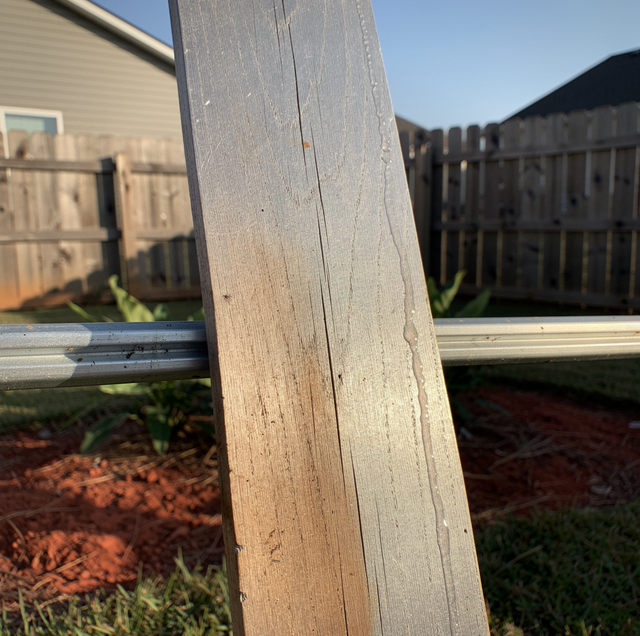
Quick Answer: Sunlight is breaking down the wood's natural glue. Wood fibers are held together partly by a compound called lignin, which absorbs ultraviolet light readily. When UV rays hit it day after day, the chemical bonds inside the lignin start to break apart, and the exposed wood cells lose their structure and are washed away by rain, leaving behind a thin layer of grayish cellulose fibers. That grayish layer is what you see when you look at a weathered fence — it is not mold and not decay in the structural sense, just photodegradation.
A wood fence starts out warm and golden, then slowly shifts toward a soft, silvery gray. It happens gradually, board by board, whether the fence sits in full sun or partial shade, and it happens every year the fence stands, not just in one season. That color change is not dirt, and it is not rot. It is a chemical reaction happening at the surface of the wood, driven mostly by sunlight, with rain and humidity playing a supporting role. Understanding what is actually happening to the wood helps you decide whether to let the gray happen, slow it down, or refinish the fence before it goes any further.
Wood fibers are held together partly by a compound called lignin, which acts like a natural binder inside the cell walls. Lignin also happens to absorb ultraviolet light readily, and when UV rays hit it day after day, the chemical bonds inside the lignin start to break apart. Once that binder degrades at the surface, the exposed wood cells lose their structure and are washed away by the next rain, leaving behind a thin layer of grayish cellulose fibers. That grayish layer is what you are looking at when you see a weathered fence. It is not mold, and it is not decay in the structural sense. It is the visible result of sunlight breaking down organic material at the surface, one microscopic layer at a time.
This process is often called UV bleaching or photodegradation, and it works on every unfinished or unprotected wood surface exposed outdoors, from decking to siding to fence pickets. A fence is particularly exposed because it stands vertically with nothing shading it for most of the day, and both faces of the boards take in light depending on the sun's position. Over months and years, that steady exposure adds up, and the surface color shifts from the original tan or reddish tone toward gray.
Rain and Humidity Speed the Process Along
Sunlight starts the reaction, but moisture helps carry it forward. Rain washes away the degraded surface fibers as fast as sunlight breaks them down, which is why a fence left bare tends to gray evenly rather than just fading in place. Without rain, the broken-down fibers would sit on the surface longer; with regular rainfall, they are rinsed off, exposing a fresh layer of wood underneath to start the cycle again.
Humidity adds another layer. Wood absorbs moisture from the air and releases it as conditions dry out, and that swelling and shrinking cycle opens tiny cracks in the wood grain. Those cracks give sunlight and water more surface area to work on, which speeds up both the graying and the raised grain texture you often feel on an older, unfinished fence. In a climate with high humidity and regular rainfall, this cycle runs almost continuously, which is one reason wood fences in wetter climates tend to gray noticeably faster than fences in dry climates.
None of this depends on a particular season. Sunlight reaches the fence in every month of the year, even on overcast days, since UV rays pass through cloud cover. Rain and humidity swings happen across the calendar too. That is why graying is a year-round, ongoing process rather than something that shows up only in summer or only after a wet spring. A fence built in any month will start the same slow shift the day it goes up.
Graying Is a Surface Change, Not Structural Damage
It helps to separate what graying is from what it is not. The wood fibers doing the actual work of holding the fence together- the rails, posts, and the bulk of each picket- are not being consumed by this process. UV bleaching and weathering act on a very thin surface layer. As long as that surface layer keeps washing away and exposing new wood, the fence simply keeps graying without losing meaningful strength.
That is different from rot, which is caused by moisture soaking into the wood and feeding fungi that digest the wood fibers from the inside out, usually starting at the base of posts or anywhere water collects and lingers. Rot softens wood, makes it spongy, and eventually causes structural failure. Graying does neither of those things on its own. A fence can turn completely silver-gray and still be just as sound as the day it was built, provided moisture is not also pooling against it or soaking into the end grain unchecked.
It is also worth separating graying from mildew staining, which shows up as dark gray, black, or greenish blotches rather than an even, uniform silver tone. Mildew is a living organism growing on the wood surface, feeding on moisture and organic residue, and it tends to cluster in shaded, damp spots rather than spreading evenly across sun-exposed boards. Graying from UV exposure is chemical and even; mildew staining is biological and patchy. A fence can have both at once, which is part of why the two get confused, but they come from different causes and need different responses.
Why Some Boards Gray Faster Than Others
If you look closely at an aging fence, you will often notice uneven weathering, some boards lighter, some darker, some patchy. A few factors explain that.
Sun exposure varies by orientation. A south-facing or west-facing side of a fence typically takes more direct sunlight through the day than a north-facing side, so it can gray faster and more evenly. Boards shaded by trees, shrubs, or nearby structures gray more slowly and unevenly, since they get a mix of dappled light and shadow rather than steady exposure.
Wood species matters too. Cedar contains natural oils and extractives that resist decay well, but those same compounds affect how the wood grays, sometimes producing a warmer gray tone compared to pine. Pine, especially pressure-treated pine, tends to gray a bit differently depending on the treatment and how much surface sealer was left on the boards at installation. Neither species is immune to UV bleaching; the natural oils in cedar slow decay, not photodegradation.
Grain orientation and cut also play a role. Flat-sawn boards weather differently than boards cut closer to the grain's edge, and rough-sawn lumber, with more exposed surface texture, tends to gray faster than smooth, planed boards because there is more surface area for sunlight and rain to act on.
Can You Stop or Reverse the Graying?
You cannot stop sunlight from reaching an outdoor fence, but you can considerably slow the bleaching and reverse the look of a fence that has already gone gray.
A pigmented stain or sealer is the most effective tool because the pigment itself blocks a significant portion of the UV rays that would otherwise reach the lignin beneath. Clear sealers offer some water resistance but very little UV protection, so a clear-finished fence still grays, just perhaps a bit slower than bare wood. A semi-transparent or solid stain with real pigment load blocks far more light and can keep a fence close to its original tone for a few years between coats.
For a fence that has already turned gray, a wood brightener or an oxalic acid-based cleaner can lift the grayed surface layer and restore much of the original color beneath, since the fresh wood is still there beneath the weathered layer. Light sanding can achieve something similar on smaller sections. Either approach works best as a first step before applying a new finish, since color restorers alone will fade again quickly without a protective topcoat behind them.
If you would rather let the fence gray naturally, that is a reasonable choice too, since an evenly weathered gray fence is not a sign of failure. Just keep an eye on the areas where graying and moisture problems can overlap: post bases, board bottoms, and spots where sprinklers or gutters keep wood consistently wet. Those areas deserve a closer look regardless of the fence's overall color, since that is where rot, not simple weathering, tends to start.
When Graying Signals a Bigger Problem
Even though graying itself is cosmetic, it is worth using a color change as a prompt to check the rest of the fence. Run a hand along the boards and press gently at the base of a few posts. Firm, solid wood under a gray surface is exactly what you would expect from normal weathering. Soft, spongy, or crumbling wood, dark staining that looks wet even when it has not rained, or a musty smell are signs of something beyond surface bleaching and warrant separate attention.
A fence that has gone gray and also shows warping, splitting along the grain, or loose fasteners has likely been absorbing and releasing moisture unevenly for years without any protective finish. That combination is a good sign it is time for cleaning, sanding, and a fresh stain, or in some sections, replacement of individual boards that have gone past what a finish can fix.
Frequently Asked Questions
Not by itself. Graying results from sunlight breaking down lignin on the wood's surface, a cosmetic change rather than structural damage. A gray fence can still be perfectly sound. Check for softness, spongy wood, or loose posts separately, since those are the real signs of a structural problem rather than color change alone.
Timing varies with sun exposure, wood species, and local humidity, but many unfinished or unsealed fences show noticeable graying within one to two years and reach a fairly uniform silver tone within a few years. Fences that get more direct, steady sunlight tend to gray faster than shaded sections.
A pigmented stain slows graying significantly because the pigment blocks much of the UV light that breaks down the lignin underneath. It will not stop the process entirely, and the protection fades as the finish wears, which is why fences typically need a fresh coat every few years to keep their color.
Often, yes. A wood brightener or oxalic acid-based cleaner can lift the weathered gray layer and reveal the fresher wood underneath, and light sanding does something similar in smaller areas. Following that with a stain or sealer helps the restored color last longer, rather than fading quickly again.
No. Graying from sunlight is even and chemical, spreading across sun-exposed boards in a uniform silvery tone. Mildew shows up as dark, blotchy, black or greenish patches, usually in shaded or damp spots, and it is a living organism rather than a surface reaction to light. A fence can show both at once, but they come from different causes and call for different fixes.
Cedar's natural oils help it resist rot and insects better than untreated pine, but those oils do not block ultraviolet light. Cedar boards still gray from sun exposure, sometimes taking on a slightly warmer tone than pine, but neither wood species is immune to the bleaching effect of sunlight over time.
Ready to refresh a weathered wood fence or plan a new one — Get a free on-site consultation to talk finish options, wood species, and long-term care. The Fayetteville Fence Company LLC serves Fayetteville, Hope Mills, and Raeford. Call (910) 994-3634.
